
Lessons from Cheung v. Lin, 2026 BCSC 596 — for buyers, sellers, and counsel
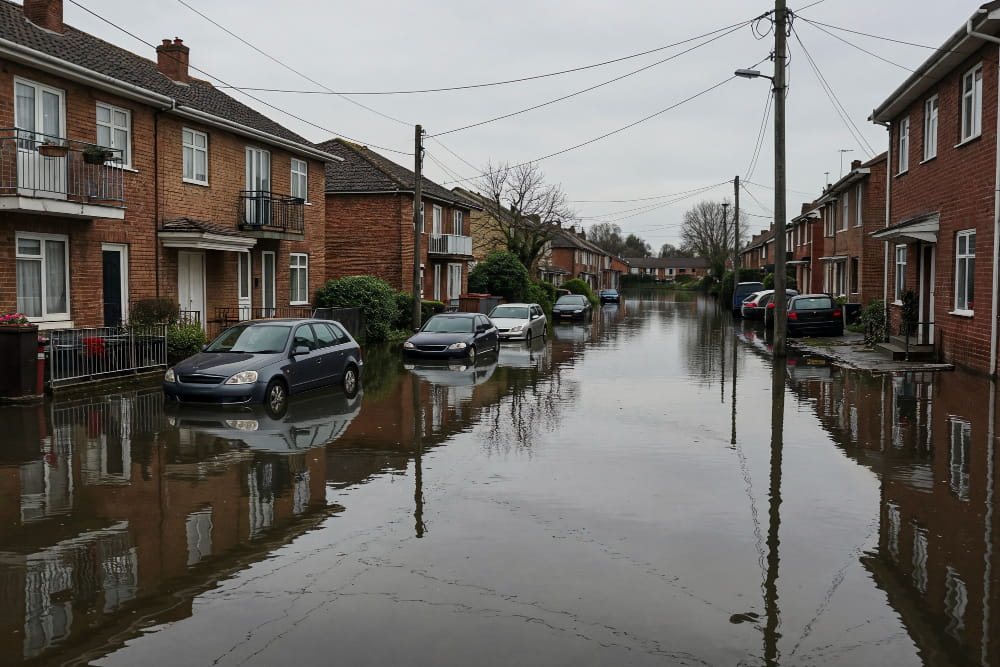
Nine days before she was supposed to take possession of a $2.65 million Richmond home, a buyer's father walked into the kitchen and saw hot water bubbling up through the floor near the island, saturated with mud and sand. Floors were warped. Tile was cracked. Water was seeping from the foundation into the yard. Inspectors warned the home was not livable and that mould could develop within weeks. Repair estimates for the in-floor radiant heating system alone came in around $155,000.
The seller's lawyer wrote to the buyer's lawyer and said, in effect: minor cosmetic damage, complete the purchase, or forfeit your deposit.
On April 2, 2026, the British Columbia Supreme Court disagreed. The buyer got her $132,500 deposit back, with interest and costs. The seller, who had already resold the property in early 2023 for nearly half a million dollars less, was left holding the loss. The case is Cheung v. Lin, 2026 BCSC 596, and it is a sharp reminder that one short paragraph buried in every standard BC real estate contract — Clause 8 — can decide who walks away and who pays.
The Misunderstanding: “Once the Subjects Are Off, the Deal Is Done”
After a subject-free offer is accepted in British Columbia, the prevailing instinct — among many sellers, some realtors, and even some lawyers — is that the contract is essentially bullet-proof. The deposit is locked up. The buyer must close or lose it. Anything that happens to the property between contract and possession is somebody else's insurance problem.
That instinct is half right and dangerously incomplete. The buyer does take on substantial risk once subjects are removed. Title transfers on the completion date. Insurance must be in place. Bank financing has to be ready. None of that is in doubt.
What gets overlooked is the seller's continuing obligation. Until the buyer takes possession, the seller still controls the property. The seller still has to deliver it in the condition promised by the contract. And the standard BC Contract of Purchase and Sale — the form published by BCREA and used across British Columbia — promises something very specific.
The Legal Truth: Clause 8 Is a Material Term
Clause 8 of the standard BC Contract of Purchase and Sale (sometimes called “section 8” in older versions) is short. It says, in plain language, that the property will be in substantially the same condition on the possession date as it was on the date the buyer viewed it. Reasonable wear and tear is allowed. Wholesale changes in condition are not.
In Cheung v. Lin, Justice Jacqueline D. Hughes was asked to decide what that promise actually means. The answer matters far beyond the parties to this case.
First, the Court held that Clause 8 is a material term of a residential contract of purchase and sale. That is significant. A material term is one a party can rely on to walk away if it is breached — without having to also prove a wider, more onerous “fundamental breach” of the contract as a whole. Where the property is not in substantially the same condition at possession, and the change in condition is serious, that breach may justify the buyer's refusal to complete and recovery of the deposit.
Second, in the alternative, the Court found that the flood and its aftermath also amounted to a fundamental breach. The seller, the judge wrote, could not perform her primary obligation: to convey a residential property that was ready for use as a residence. Active water damage, warped flooring, ongoing repair work, removed drywall, and unresolved structural and mould risks together deprived the buyer of substantially the whole benefit of her bargain.
In other words, the buyer had two independent legal routes to the same destination. Either was sufficient on these facts — though, as with all contract analysis, outcomes turn on the specific contract terms and the facts in play.
The defendant could not perform her primary obligation under the contract: to convey to the plaintiff a residential property that was ready for use as such.
Where Cheung v. Lin Fits in the Wider Jurisprudence
Cheung v. Lin does not appear out of thin air. It sits within a body of BC and Canadian authority on three intersecting questions: when a buyer can repudiate, when a seller can keep a deposit, and what “substantially the same condition” actually requires.
On deposits, the BC Court of Appeal in Tang v. Zhang, 2013 BCCA 52, restored the traditional rule that a deposit is a guarantee of performance — generally forfeit to an innocent seller when a buyer walks away without legal justification, even if the seller suffers no provable loss. That is the headline most sellers know. What sellers tend to miss is the unspoken premise: the seller must in fact be the innocent party. If the seller is the one in breach, Tang does not save the deposit.
On fundamental breach, Canadian courts have moved away from rigid categorical tests toward the practical question first articulated in Hong Kong Fir Shipping Co. Ltd. v. Kawasaki Kisen Kaisha Ltd., [1962] 2 Q.B. 26, and applied in various forms across Canadian contract law: did the breach deprive the innocent party of substantially the whole benefit of the contract? Where a residential buyer cannot move into a home she has agreed to buy, the practical test largely answers itself.
On Clause 8 specifically, the clause exists precisely because the gap between contract and possession is when properties can be damaged, neglected, or stripped. By requiring substantially the same condition at possession, it places that interim risk on the seller, who retains control of the property. Cheung v. Lin confirms what many practitioners had assumed but had not seen squarely held: the clause is not boilerplate filler. In this case, the Court treated Clause 8 as a material term.
The twist in Cheung v. Lin, and the reason it may become an important reference point for BC counsel, is the Court's treatment of the seller's conduct after the flood. Justice Hughes described the seller's approach to investigating the consequences of the flood as somewhat lackadaisical and rejected portions of her evidence about the extent of the damage. The seller had arranged emergency drying and pipe repairs but did not complete flooring and drywall work until well after the scheduled possession date. Even into late July and early August, water damage remained in baseboards and cabinetry. The buyer was told, by text, only that pipes were fixed and that flooring and drywall work was underway — without any meaningful disclosure of the inspector's reports or the plumbing report the seller had commissioned. That last point is worth pausing on. The standard of conduct expected of a seller in this situation is not silence; it is disclosure.
Practical Guidance
For BC homeowners selling property, BC buyers purchasing it, and the counsel and realtors who advise them, Cheung v. Lin yields concrete lessons.
If you are selling:
- Insure to possession. Although contractual risk under the standard CPS generally passes to the buyer at 12:01 a.m. on the completion date, the seller's Clause 8 obligation to deliver the property in substantially the same condition continues until possession. A flood, fire, vandalism, or burst pipe between completion and possession can still leave the seller exposed to a claim for damages or refusal to complete.
- Maintain the property as if you were going to live in it through possession day. The standard is substantially the same condition, not whatever-condition-it-ends-up-in.
- If damage happens, disclose it in writing immediately and in detail. Share inspector reports, plumbing reports, contractor estimates, and timelines. Hiding behind “minor cosmetic” characterizations will not survive judicial scrutiny.
- Do not assume the buyer's deposit is yours. A seller in breach is not entitled to keep a deposit, no matter how strongly worded the boilerplate sounds.
- If something significant occurs and you cannot deliver on time, talk to your lawyer about a negotiated extension or a price abatement before you write a take-it-or-leave-it letter. Negotiation is almost always cheaper than litigation.
If you are buying:
- Walk through the property as close to possession day as possible. Bring an inspector if there is any reason to suspect a change in condition.
- Document everything. Photos, video, dated texts and emails. The buyer in Cheung v. Lin was helped enormously by contemporaneous photos of the flood and the inspector's report.
- If the property is not in substantially the same condition, do not simply refuse to close. Get legal advice the same day. The path forward depends on facts that can change quickly — including whether the damage is repairable before completion, whether the seller is willing to compensate, and whether your financing remains in place.
- Keep communicating through counsel once a dispute crystallizes. Direct messaging between buyer and seller at that point creates evidence that helps the other side more often than it helps you.
For realtors and conveyancers, the practical lesson is to never describe Clause 8 to a client as a standard or boilerplate clause without a warning. It is a material term. Treat it that way at the offer stage, at subject removal, and again in any pre-possession walk-through.
If You Are Facing a Pre-Possession Dispute
Real estate transactions in BC unfold quickly, and a single week between a damage event and the scheduled possession date can decide who keeps a six-figure deposit. Whether you are a buyer wondering whether you can walk away, a seller staring at a flooded basement, or counsel for either side, early legal advice is far cheaper than the litigation that follows a wrong move.
At George Lee Law in Vancouver, we have advised buyers, sellers, and litigants in BC real estate disputes for more than two decades, including matters involving deposit forfeiture, fundamental breach, specific performance, and the often-misunderstood Clause 8 of the standard Contract of Purchase and Sale. We work in English, Cantonese, and Mandarin, and we act across the Lower Mainland and the rest of British Columbia.
If you have questions about a real estate transaction that is heading off the rails — or one that has already collapsed — please contact our office at 604-681-1611 or info@gleelaw.com. We will tell you, directly and quickly, whether you have a case worth pursuing or defending.
This article is general legal information current as of May 2026, not legal advice. Every case turns on its own facts. Reading this article does not create a solicitor-client relationship between you and George Lee Law. If you have a real estate matter in British Columbia, please contact a lawyer for advice specific to your situation. Case citations should be verified against CanLII before being relied upon. Cheung v. Lin, 2026 BCSC 596 is a first-instance decision and should be checked for appeal status before reliance.
George Lee Law · 李广田律师事务所
李广田律师
Vancouver, British Columbia, Canada
604-681-1611 | gleelaw.com | info@gleelaw.com
Service in English, Cantonese, and Mandarin / 提供英文、粤语及普通话服务